
wp:paragraph
Have you spotted “AF” in your teen’s texts and wondered what this mysterious abbreviation means? You’re not alone!
/wp:paragraph
wp:paragraph
This tiny two-letter term has exploded across social media, text messages, and even mainstream advertising.
/wp:paragraph
wp:paragraph
Let’s look into what AF really means, how it’s used, and what parents should know about this popular slang term.
/wp:paragraph
wp:image {“id”:240145,”width”:”678px”,”height”:”auto”,”sizeSlug”:”full”,”linkDestination”:”none”,”align”:”center”}

/wp:image
wp:heading
What Does AF Mean?
/wp:heading
wp:paragraph
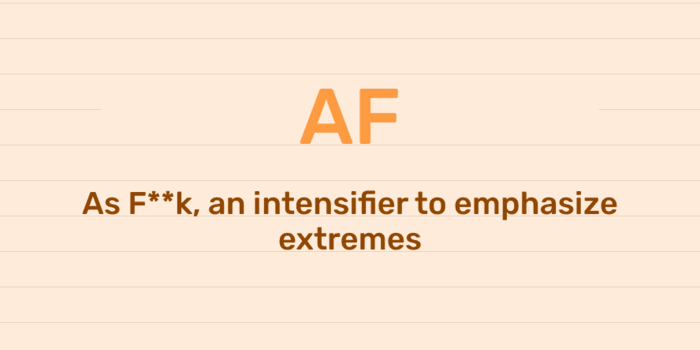
AF meaning: AF stands for “As F**k,” an intensifier used to emphasize feelings, situations, or descriptions.
/wp:paragraph
wp:paragraph
This internet slang initialism has become incredibly common in digital communication, especially among teenagers and young adults.
/wp:paragraph
wp:paragraph
It’s essentially a way to add extreme emphasis to whatever precedes it, similar to saying “very” or “extremely” but with much more intensity.
/wp:paragraph
wp:paragraph
The abbreviation cleverly shields the explicit language while still conveying the same emphatic meaning.
/wp:paragraph
wp:paragraph
This makes it both convenient for typing and slightly more socially acceptable than spelling out the full phrase.
/wp:paragraph
wp:image {“id”:240148,”width”:”668px”,”height”:”auto”,”sizeSlug”:”full”,”linkDestination”:”none”,”align”:”center”}
/wp:image
wp:heading
How Is AF Used? Real-Life Examples
/wp:heading
wp:paragraph
Teens use AF in countless situations to express intense feelings or reactions. The term has incredible versatility and pops up in both positive and negative contexts.
/wp:paragraph
wp:paragraph
Here are some common examples of how your teen might use AF in their daily digital conversations:
/wp:paragraph
wp:list
- wp:list-item
- Friend: “How was football practice?” Teen: “savage af” (Meaning it was extremely intense or difficult)
/wp:list-item
/wp:list
wp:paragraph
/wp:paragraph
wp:list
- wp:list-item
- Teen to friend: “That pizza was dope AF” (Expressing that the pizza was extremely good)
/wp:list-item
/wp:list
wp:paragraph
/wp:paragraph
wp:list
- wp:list-item
- Friend: “Have you seen The Fault in Our Stars?” Teen: “Yeah, sad af.” (Indicating the movie was extremely sad)
/wp:list-item
/wp:list
wp:paragraph
/wp:paragraph
wp:list
- wp:list-item
- Friend: “Want to go bowling?” Teen: “Nah I’m tired AF.” (Saying they’re extremely tired)
/wp:list-item
/wp:list
wp:paragraph
The term flows naturally in conversation and rarely stands alone. Instead, it typically follows an adjective to amplify its meaning.
/wp:paragraph
wp:paragraph
AF’s efficiency makes it particularly popular—just two letters pack a powerful punch of emphasis.
/wp:paragraph
wp:heading
When Did AF Become Popular?
/wp:heading
wp:paragraph
While it’s hard to say exactly when AF first caught on, it really took off during the height of text messaging and platforms with strict character limits, like Twitter.
/wp:paragraph
wp:paragraph
In those spaces, every character mattered—so short, punchy terms like AF made perfect sense.
Its usage skyrocketed between 2013 and 2015, right when Instagram and Snapchat became household names.
By 2016, AF was so widely used that even brands began slipping it into marketing—though usually with a bit of caution.
/wp:paragraph
wp:heading
Is AF Appropriate? What Parents Should Know
/wp:heading
wp:image {“id”:240147,”width”:”658px”,”height”:”auto”,”sizeSlug”:”full”,”linkDestination”:”none”,”align”:”center”}

/wp:image
wp:paragraph
AF may soften the original profanity, but it still hints at an explicit phrase. Many teens use it casually, often without realizing what it actually stands for—much like other phrases with overlooked origins.
It sits in a gray zone when it comes to appropriateness. While it’s widely accepted and seen as fairly mild nowadays, it’s definitely not a term you’d want your teen using in a formal setting like a classroom or job interview.
/wp:paragraph
wp:heading
How to Spot If Your Child Is Using AF
/wp:heading
wp:paragraph
You might discover your teen uses AF through:
/wp:paragraph
wp:list
- wp:list-item
- A glimpse of their text messages
/wp:list-item
/wp:list
wp:paragraph
/wp:paragraph
wp:list
- wp:list-item
- Social media posts or comments
/wp:list-item
/wp:list
wp:paragraph
/wp:paragraph
wp:list
- wp:list-item
- Conversations with friends
/wp:list-item
/wp:list
wp:paragraph
/wp:paragraph
wp:list
- wp:list-item
- Direct messages that pop up on their phone screen
/wp:list-item
/wp:list
wp:paragraph
While AF itself is relatively harmless as teen slang goes, parents should stay aware of the broader digital vocabulary their children use. Some slang terms could indicate risky behaviors or problematic communications.
/wp:paragraph
wp:paragraph
For greater peace of mind, consider using parental control apps that can alert you to potentially concerning patterns in your child’s digital communications. These tools allow you to:
/wp:paragraph
wp:list
- wp:list-item
- Receive alerts about potentially risky conversations
/wp:list-item
/wp:list
wp:paragraph
/wp:paragraph
wp:list
- wp:list-item
- Monitor for signs of cyberbullying or predatory behavior
/wp:list-item
/wp:list
wp:paragraph
/wp:paragraph
wp:list
- wp:list-item
- Stay informed without necessarily reading every message
/wp:list-item
/wp:list
wp:paragraph
/wp:paragraph
wp:list
- wp:list-item
- Adjust monitoring levels based on your child’s age and maturity
/wp:list-item
/wp:list
wp:heading
Having the Conversation: Talking to Your Teen About AF and Slang
/wp:heading
wp:paragraph
Rather than simply banning certain terms, use this as an opportunity to discuss digital literacy and communication appropriateness. Here’s how to approach the conversation:
/wp:paragraph
wp:heading {“level”:3}
Discussion Starters:
/wp:heading
wp:list {“ordered”:true}
- wp:list-item
- “I noticed the term ‘AF’ in some messages. Do you know what it stands for?”
- “Let’s talk about how language changes depending on who you’re talking to. When might AF not be appropriate?”
- “How do you decide which slang terms to use with different people?”
/wp:list-item
wp:list-item
/wp:list-item
wp:list-item
/wp:list-item
/wp:list
wp:heading {“level”:3}
Questions to Explore Together:
/wp:heading
wp:list
- wp:list-item
- “When you’re speaking to someone, are you aware of your brain’s filtering what you’re saying?”
/wp:list-item
/wp:list
wp:paragraph
/wp:paragraph
wp:list
- wp:list-item
- “What expressions should you avoid when speaking to teachers and potential employers?”
/wp:list-item
/wp:list
wp:paragraph
/wp:paragraph
wp:list
- wp:list-item
- “Are there phrases you use with friends that you wouldn’t use with adults?”
/wp:list-item
/wp:list
wp:paragraph
/wp:paragraph
wp:list
- wp:list-item
- “What are some effective alternatives to AF that still get your point across?”
/wp:list-item
/wp:list
wp:heading
Teaching Digital Code-Switching
/wp:heading
wp:image {“id”:240146,”width”:”660px”,”height”:”auto”,”sizeSlug”:”full”,”linkDestination”:”none”,”align”:”center”}

/wp:image
wp:paragraph
One of the most valuable skills you can help your teen develop is “code-switching”—the ability to adjust language and communication style based on context.
/wp:paragraph
wp:paragraph
This skill will serve them well throughout life, from college applications to job interviews.
/wp:paragraph
wp:paragraph
Explain that different environments have different expectations:
/wp:paragraph
wp:list
- wp:list-item
- Friend group chat: Casual slang like AF might be fine
/wp:list-item
/wp:list
wp:paragraph
/wp:paragraph
wp:list
- wp:list-item
- School email to a teacher: Professional language required
/wp:list-item
/wp:list
wp:paragraph
/wp:paragraph
wp:list
- wp:list-item
- Job application: Formal communication expected
/wp:list-item
/wp:list
wp:paragraph
/wp:paragraph
wp:list
- wp:list-item
- Family dinner table: Respectful conversation appropriate
/wp:list-item
/wp:list
wp:heading
Alternative Expressions to AF
/wp:heading
wp:paragraph
If you’re looking to suggest alternatives, here are some options that convey emphasis without hidden profanity:
/wp:paragraph
wp:list
- wp:list-item
- “Extremely”
/wp:list-item
/wp:list
wp:paragraph
/wp:paragraph
wp:list
- wp:list-item
- “Seriously”
/wp:list-item
/wp:list
wp:paragraph
/wp:paragraph
wp:list
- wp:list-item
- “So much”
/wp:list-item
/wp:list
wp:paragraph
/wp:paragraph
wp:list
- wp:list-item
- “Incredibly”
/wp:list-item
/wp:list
wp:paragraph
/wp:paragraph
wp:list
- wp:list-item
- “Beyond”
/wp:list-item
/wp:list
wp:paragraph
/wp:paragraph
wp:list
- wp:list-item
- “Super”
/wp:list-item
/wp:list
wp:paragraph
/wp:paragraph
wp:list
- wp:list-item
- “Totally”
/wp:list-item
/wp:list
wp:heading
The Bottom Line on AF Meaning
/wp:heading
wp:paragraph
AF has carved out a spot in everyday language as a strong way to emphasize something.
Though it hides a profanity, it’s now so widely used that many people don’t even think about its original meaning.
/wp:paragraph
wp:paragraph
For parents, the goal doesn’t have to be removing the term from your teen’s vocabulary—instead, it’s about teaching when and where certain language is appropriate.
/wp:paragraph
wp:paragraph
Coming to the conversation with curiosity instead of criticism opens the door to a deeper talk about language use, online behavior, and how to adapt communication depending on the situation—valuable lessons that go far beyond texting.
/wp:paragraph